This documentary is divided into three episodes, and this is the first part.
It depicts Sany’s development from 1985 to 2002.
Starting from a humble basement workshop, the enterprise grew into a domestic industry leader. Its capital expanded from 60,000 yuan to 985 million yuan, and the founding team expanded from 4 to 9 core members.
How did Sany achieve such remarkable growth step by step?
A basement, a 60,000‑yuan startup fund, and four founders who quit stable jobs to chase a dream. From a little backwater plant to one of the world’s top‑three construction machinery giants.
Let us step back into that turbulent era and take a bird’s‑eye view of SANY Heavy Industry’s rise to greatness.
Preface: Welcome to Zoryor!
In the mid‑1980s, China fully advanced its reform and opening‑up drive, bringing historic changes to national economic policies. The long‑standing unitary planned economic system and strict controls over private and individual businesses were gradually relaxed. The government issued policies to boost market vitality, advocated the principle of “allowing some people to get rich first”, and encouraged talent mobility and entrepreneurship among state‑sector employees. The whole country thus entered a bonus era of shortage economy, where a small number of far‑sighted pioneers seized entrepreneurial opportunities amid the tides of the times.
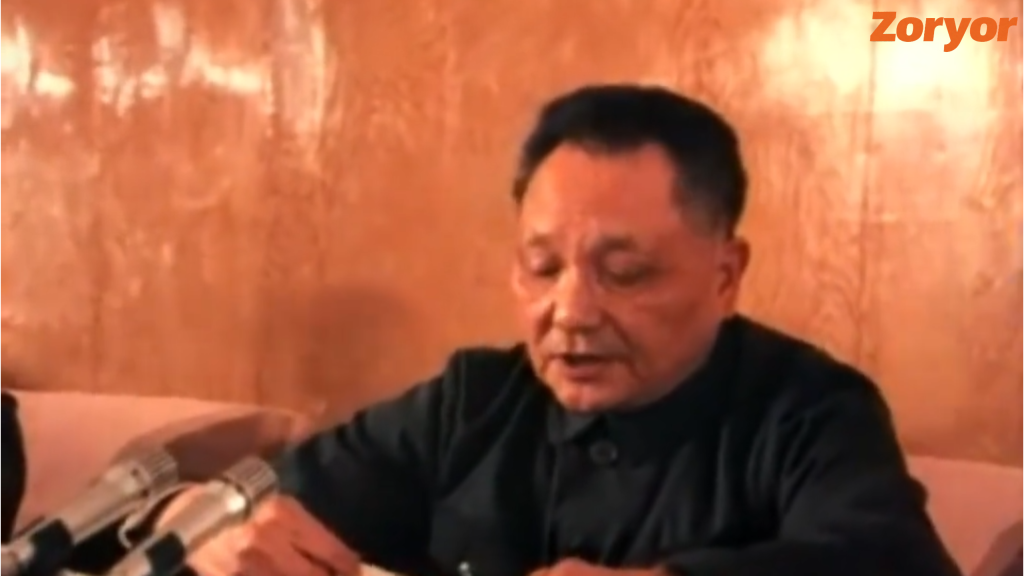
Part I (1985‑1993) The Pioneering Stage: Four Scholars, a 60,000‑Yuan Startup Fund
In 1986
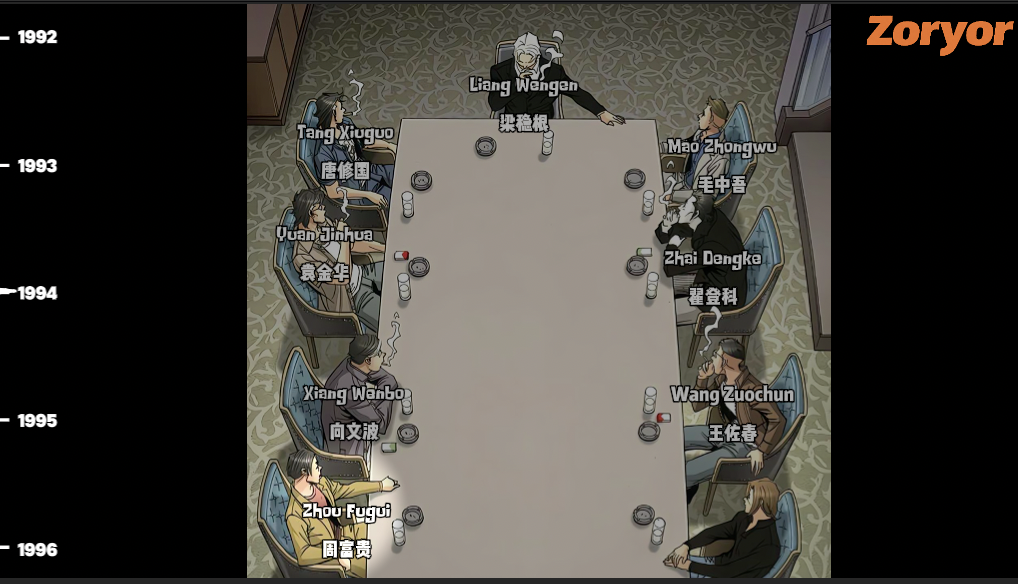
Four engineers at Hongyuan Machinery Factory in Lianyuan, Hunan Province — Liang Wengen, Tang Xiuguo, Yuan Jinhua and Mao Zhongwu — gathered behind the factory hillside. They burned incense to swear an oath of sworn brotherhood, vowing solemnly: “For life, we shall remain loyal to one another, share weal and woe, and strive unswervingly to revitalize China’s national industry.”
Sworn brotherhood is a well‑known traditional Chinese custom. People with deep friendship yet no blood ties hold a solemn ritual to pledge brotherhood, promising to stand by each other through good and bad times.
Back then, China was poor and weak, striving to explore new paths of development. The four learned young men cherished lofty aspirations to serve the country and its people. Thus began the legendary journey of SANY Heavy Industry, launched by these four passionate trailblazers.
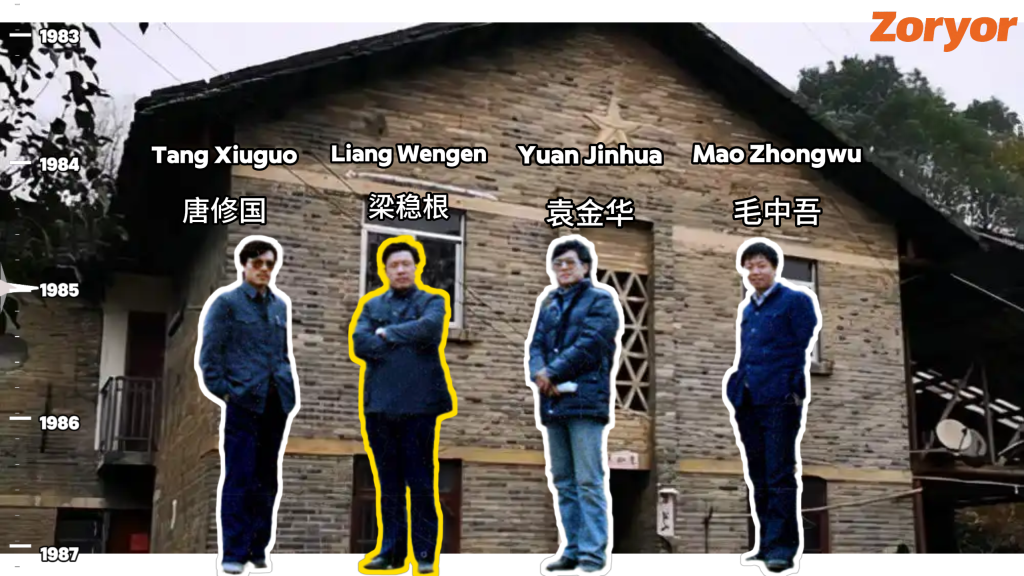
The following year, in 1986.
Liang Wengen, the eldest of the four at 30, and Tang Xiuguo, the youngest at 23, resolutely resigned from their stable jobs at a state‑owned military‑industrial enterprise to embark on their entrepreneurial journey. Initially, hearing that sheep trading promised handsome profits, they purchased sheep from other regions. Unexpectedly, sheep prices plummeted, forcing them to sell the livestock quickly to stop losses. Later they dabbled in the liquor business but failed due to lack of sales experience. They then turned to the glass fiber industry, only to fail again from misaligned market positioning.
After multiple setbacks, Liang Wengen and Mao Zhongwu keenly noticed a market shortage of welding materials, an industry perfectly matching their academic backgrounds. The four pooled 60,000 yuan as startup capital and set up a factory in the basement of their hometown in Lianyuan, Hunan Province, with Liang Wengen as factory director. Working hand‑in‑hand, the team carried out more than a hundred rounds of repeated formula tests and finally developed the 105 copper‑based solder, filling the market gap left by reliance on imported high‑end welding materials. Production conditions were primitive at first: a basement, just one heater, one furnace, and several sets of molds. Their first batch of products was even returned by customers for substandard quality. (What if they had given up after this rejection?)
Later, Professor Zhai Dengke gave them guidance. (Zhai Dengke, a materials science professor at Central South University of Technology (now Central South University) and undergraduate supervisor of Liang Wengen, was an authoritative expert in welding materials. Around 50 when he joined SANY, he held 1% of its shares and served as technical advisor, becoming an original member of SANY’s nine‑person board but not part of core management.) With his guidance and improvements, the product met national standards. This first commercial product earned the enterprise its first income of 9,000 yuan, laying the foundation for its entrepreneurship.
That same year, Caterpillar stood as the unshakable global leader in construction machinery. No one could have imagined that this grassroots team starting from scratch would one day grow strong enough to compete with international giants and reshape the global construction machinery landscape.
Three years later, in 1989
Driven by China’s rapid infrastructure development, their Lianyuan Welding Materials Factory posted annual revenue exceeding 10 million yuan, emerging as a well‑known local materials manufacturer.

By 1991
The factory’s output value surpassed 100 million yuan, making it the largest private enterprise in the region. Liang Wengen’s team then reflected that a mindset of settling for modest gains would limit growth. They needed grand visions to unite the team, abandon small‑workshop thinking, and aim for great achievements.
Liang Wengen officially renamed the enterprise “SANY”. Derived from “three ones”, it stands for three top‑tier goals: building a first‑class enterprise, cultivating first‑class talents, and making first‑class contributions. At the time, this was seen as an ambitious corporate vision.
In the same year, key figure Xiang Wenbo joined SANY.
Then 29 years old, Xiang was highly ambitious and shared core values with Liang Wengen, both dreaming of revitalizing national industry. Holding a master’s degree in casting from Dalian University of Technology and with management experience in government agencies and state‑owned factories, he quit his secure government job to join SANY resolutely. He became the fifth co‑founder beyond the core four‑member team of Liang Wengen, Tang Xiuguo, Yuan Jinhua and Mao Zhongwu, and one of the “Eight Diamond Generals”.
Two years earlier, in 1989, he had supported SANY as a seconded official of Lianyuan City’s former Economic Commission. Already inspired by Liang Wengen’s entrepreneurial passion and vision of “building a first‑class enterprise”, he once said frankly, “I do not want to be an official; I just want to get things done.” He believed SANY would realize his industrial aspirations.
Together, Xiang and Liang reviewed their years of experience in the welding materials industry and identified two major bottlenecks:
First, Lianyuan, where the factory was located, was geographically remote, limiting access to talents and markets.
Second, the welding materials industry was small‑scale with stagnating growth potential.
They jointly put forward the initial plan for a dual‑entry strategy:
- Relocate to Changsha, the capital city of Hunan Province.
- Enter the construction machinery sector.
The Year 1992
SANY stood at a critical turning point, transitioning from welding materials to construction machinery. Liang Wengen urgently needed versatile talents skilled in both technology and management. Introduced by others, 29‑year‑old Wang Zuochun was recruited by Liang Wengen. Holding 1% of SANY’s shares, he was a major driver of its internationalization strategy and one of the Eight Diamond Generals.
On September 28 of the same year, Zoomlion Heavy Industry Science and Technology Co., Ltd. was founded.
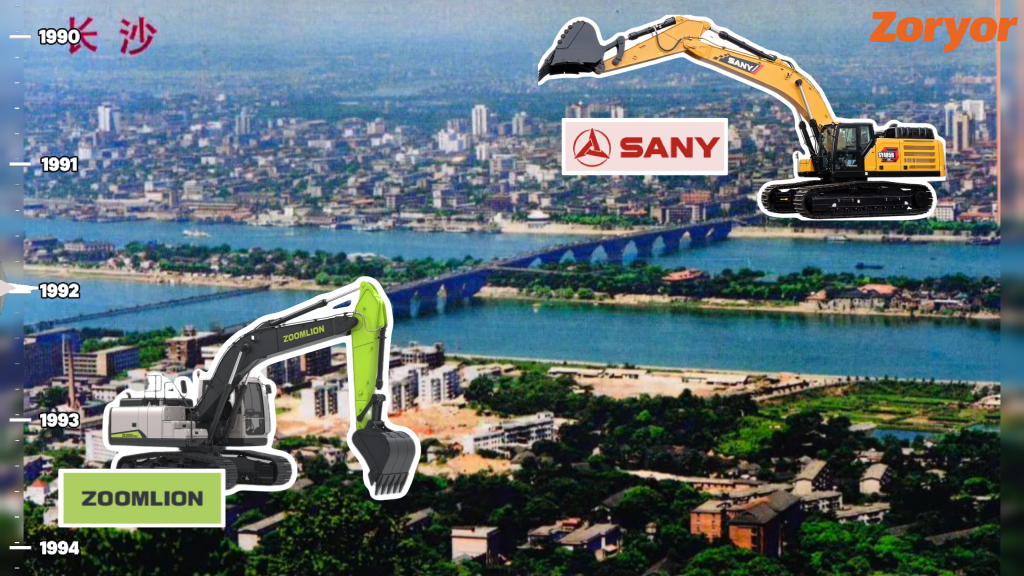
The Xiangjiang River runs through Changsha. On one side lay SANY Heavy Industry, rising from nothing through bold growth; on the other stood Zoomlion, restructured from scientific research institutes with profound heritage. The two giants faced each other across the river, marking the start of a fated commercial rivalry. For decades, they clashed in brutal price wars and were caught up in a nationally famous wiretapping scandal, locked in fierce competition in Changsha. In the end, SANY left its hometown and moved north to Beijing.
1993: A Pivotal and Turbulent Year for SANY
In the first half of the year, Liang Wengen presided over five expert demonstration meetings and more than ten board meetings, repeatedly persuading team members to fully implement the dual‑entry strategy with the vision of “Serving the country through industry; only large industries promise a great future”.
Between June and August, SANY selected a factory site in Changsha. Investing nearly all profits from its welding materials business — an initial 3 million yuan — the company purchased land and built simple workshops. The first batch of 30 core employees moved from Lianyuan to Changsha, and a construction machinery R&D team was formed, focusing on concrete trailer‑mounted pumps.
From September to October, Liang Wengen made a high‑stakes decision to halt welding‑materials production, triggering internal unrest within the enterprise.
At an all‑staff meeting at the Lianyuan factory, Liang Wengen announced the complete shutdown of welding‑materials manufacturing, halting all new investment and shifting all personnel to construction machinery. He finalized the decision within just 30 minutes. Back then, welding materials accounted for 80% of company revenue; cutting off this stable core business meant gambling on an uncertain future.
The entire crowd was in an uproar. Many senior employees shed tears on the spot, fearing job losses. Liang Wengen promised there would be no layoffs. All staff would receive job‑transfer training with unchanged salaries. He pledged: “Stick with me, and your income will double within three years.” Overwhelmed with anxiety yet helpless, employees had no choice but to trust him.
At that time, the media labeled SANY a “gambler betting against the trend”, and Liang Wengen was mocked as an idealist lacking business acumen.
Amid jeers and doubts, December arrived.
Inside the simple factory building in Changsha, the R&D team successfully assembled the first prototype of a concrete trailer‑mounted pump. The prototype realized stable concrete pumping functions, verifying the feasibility of the technical route and laying groundwork for official production in 1994.
At the very start of its entrepreneurship, the four dreamers burned their boats and began their welding‑materials venture in a basement. Having weathered countless hardships, the enterprise grew to an annual output value of over 100 million yuan, with wealth and stability within reach. Yet staying true to their original aspiration of serving the nation through industry, they refused to be confined by the growth ceiling of a small industry. Voluntarily giving up hard‑won success and comfort, they resolutely crossed into construction machinery, restarting from scratch. This marked the beginning of SANY’s second phase toward becoming a global heavy‑industry giant.
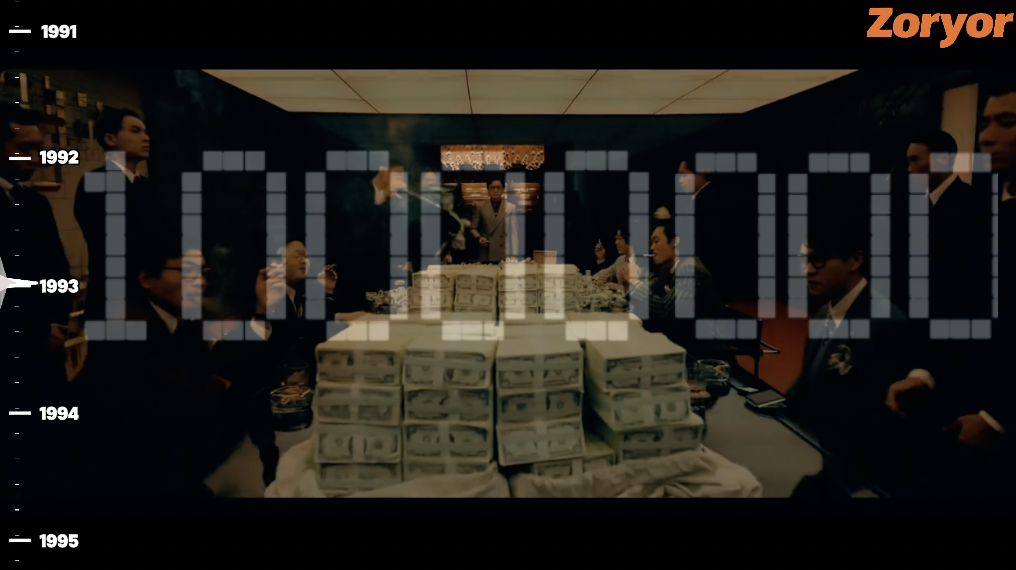
Part II (1994–2002) Technology Breakthrough Period: Breaking Foreign Monopoly — From Zero to One, Obsessively Perfecting Trailer‑Mounted Concrete Pumps
1994
The first domestically‑produced concrete trailer‑mounted pump rolled off the production line. SANY independently developed China’s first open‑type concrete trailer‑mounted pump, yet core valve assemblies still relied on imports. Manifold valves suffered unstable performance, frequent malfunctions and high failure rates.
In May of the same year, Liang Wengen invited his schoolmate Zhou Fugui to join SANY. As SANY prepared to relocate to Changsha and expand its construction machinery business, it urgently needed high‑end materials and management talents.
Zhou Fugui, a senior engineer with dual master’s degrees, was 32 years old then. Drawing on his materials expertise and management experience, he made vital contributions to SANY’s materials industry and international development, becoming one of the Eight Diamond Generals.
1995
SANY’s new industrial park in Changsha was completed and put into official operation.
Notably, on the eve of production launch: Liang Wengen originally planned to customize pure‑gold commemorative medals for core contributors to factory construction. However, tight construction schedules left no time for production. Instead, he hand‑wrote IOUs on A4 paper as vouchers, promising huge rewards once the enterprise’s output value hit 10 billion yuan and 100 billion yuan respectively.
The enterprise was going through a painful transition period with an uncertain future. Self‑developed core technologies for concrete trailer‑mounted pumps were immature, product failure rates remained high, and the market deeply distrusted domestic equipment, resulting in scarce orders. Large volumes of finished products piled up in warehouses due to quality issues, tying up massive working capital. Corporate cash flow dried up completely, leaving no funds even for employee travel expenses. Liang Wengen cashed in his personal treasury bonds to barely keep the company running. Meanwhile, payment deadlines for component purchases converged, with suppliers repeatedly demanding payment, pushing the production chain to the brink of collapse.
Harsh reality doused the founding team’s initial enthusiasm and dealt heavy blows. Former partners grew confused and wavering. Many questioned inwardly: was the high‑stakes dual‑entry strategy really the right path?
In June, Liang Wengen traveled to Beijing, China’s capital, to seek technical support from Yi Xiaogang, then Director of the Hydraulic System Section at the Beijing Automation Research Institute under the Ministry of Machinery Industry.
In September of the same year, Yi Xiaogang officially joined SANY Heavy Industry as a technical collaborator, becoming part of its less‑than‑20‑member R&D team. Later, he gave up his comfortable Beijing job and lifestyle, resigned from his government‑affiliated position, and devoted himself full‑time to SANY’s technological R&D. One of SANY’s eight core founders, he led overall corporate R&D efforts. Then 32 years old, Yi Xiaogang became SANY’s technical anchor and the legendary figure behind breaking foreign monopolies, the last of the Eight Diamond Generals.
Yi Xiaogang’s arrival gave a massive boost to SANY’s R&D. Leading the team, he abandoned foreign technology using non‑standard parts and redesigned manifold valve assemblies with market‑available standard components. In less than 30 days, they successfully developed domestically‑produced manifold valve assemblies with entirely different working principles, securing SANY’s first national patent and completely eliminating previous equipment malfunctions. For the first time, SANY’s trailer‑mounted pumps outperformed international giants such as Caterpillar and Putzmeister in core performance indicators, while selling at only half the price of imported models. Boasting overwhelming cost‑performance advantages over foreign brands, they sparked a wave of domestic substitution.
This turning point — brought by top technical talent joining — allowed SANY to seize its only lifeline on the brink of collapse.
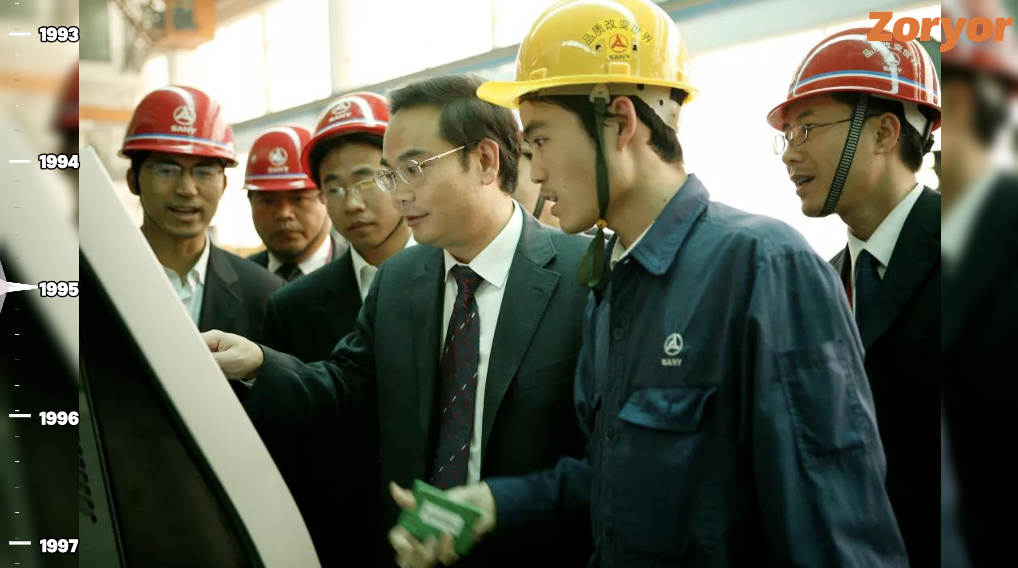
1996: SANY Begins to Shine in Construction Machinery
Trailer‑mounted pump products matured.
In October, at the national construction site of Terminal 2 of Beijing Capital International Airport, the Beijing Municipal Commission of Urban‑Rural Development and Economic Commission organized an international technical competition among global brands. Facing harsh working conditions with highly viscous concrete, SANY’s self‑developed trailer‑mounted pump performed stably, ranking first domestically and second globally, second only to Germany’s Schwing. This single victory built a strong reputation for domestic concrete machinery. The competition served as SANY’s “passport” to the national market, breaking the industry pattern where “over 90% of trailer‑mounted pumps were foreign‑branded”, and winning market recognition for domestic concrete machinery.
1997
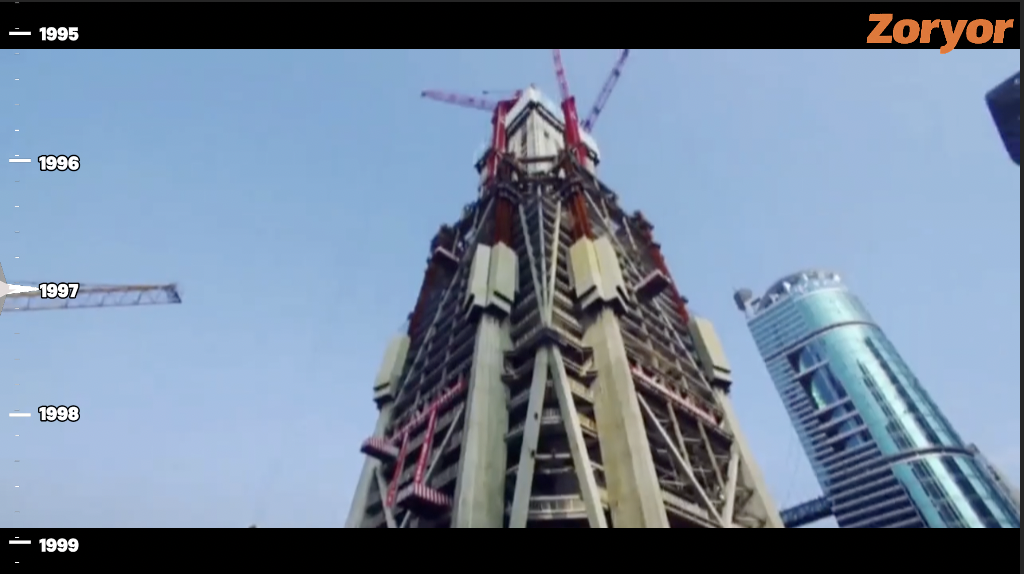
At Shenzhen Pengnian Plaza, SANY’s ultra‑high‑pressure concrete pumps supported construction of the 220‑meter super‑high‑rise building, successfully overcoming technical barriers to super‑high‑rise concrete pumping. Outperforming overseas brands in cost‑performance, SANY became an instant hit in the Shenzhen market, launching its rapid expansion across South China.
That same year, Liang Wengen clearly stated: “Technological innovation is SANY’s core competitiveness”, establishing the technical principle of “independent R&D, no copycatting”, guiding SANY’s technological development for the next three decades.
With an annual output value of nearly 250 million yuan, a sharp increase from 1996, SANY secured its leading industry position. After years of tackling hardships, SANY finally gained a firm foothold in the trailer‑mounted pump sector, evolving from an industry follower into a benchmark for domestic equipment.
Although established in trailer‑mounted pumps, by the late 1990s foreign brands fully monopolized China’s concrete pump truck market. All long‑boom pump trucks over 37 meters relied on imports, with each imported unit priced at 6 million yuan. Domestic manufacturers could only produce short‑boom pump trucks under 30 meters. Core long‑boom technologies above 36 meters were strictly blocked by foreign firms, who even claimed: “China will never build a pump truck with a boom longer than 37 meters.” A well‑known industry curse circulated then: “One meter, a climb to heaven”, meaning extending the boom by one meter was harder than reaching the sky.
In 1997, Liang Wengen and Yi Xiaogang reached an agreement to officially launch pump‑truck R&D. Leading more than ten engineers, Yi Xiaogang confronted the industry curse and began independent R&D on long‑boom pump trucks.
By July 1998
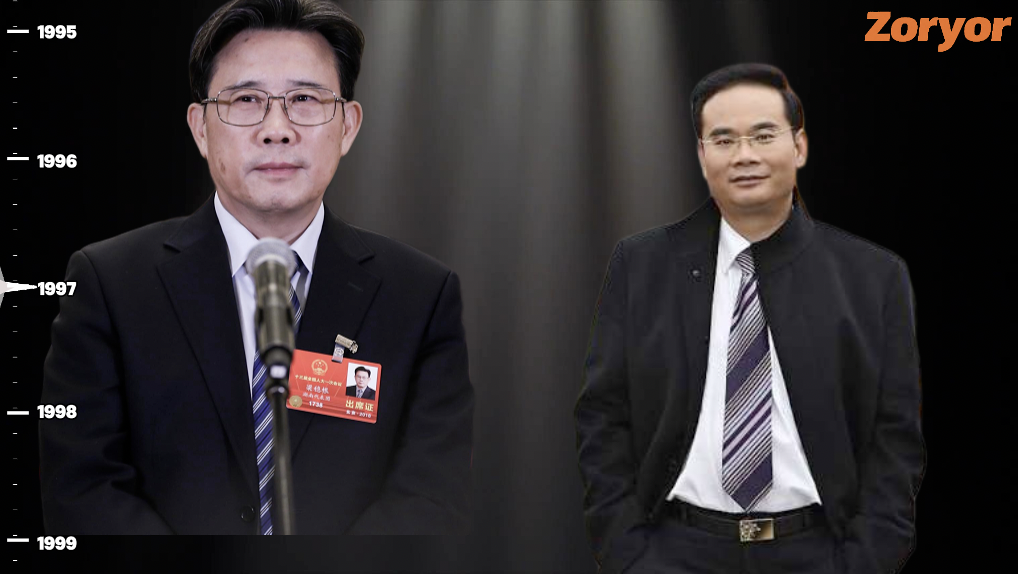
Under Yi Xiaogang’s leadership, China’s first 37‑meter long‑boom concrete pump truck with independent intellectual property rights was successfully developed. It shattered the “one‑meter‑to‑heaven” technical barrier, broke decades‑long foreign technological monopolies, and completely reshaped China’s pump‑truck market. Priced at only 3.7 million yuan, nearly 40% cheaper than imported models at 6 million yuan, the 37‑meter pump truck rapidly captured China’s high‑end pump‑truck market with superior cost‑performance.
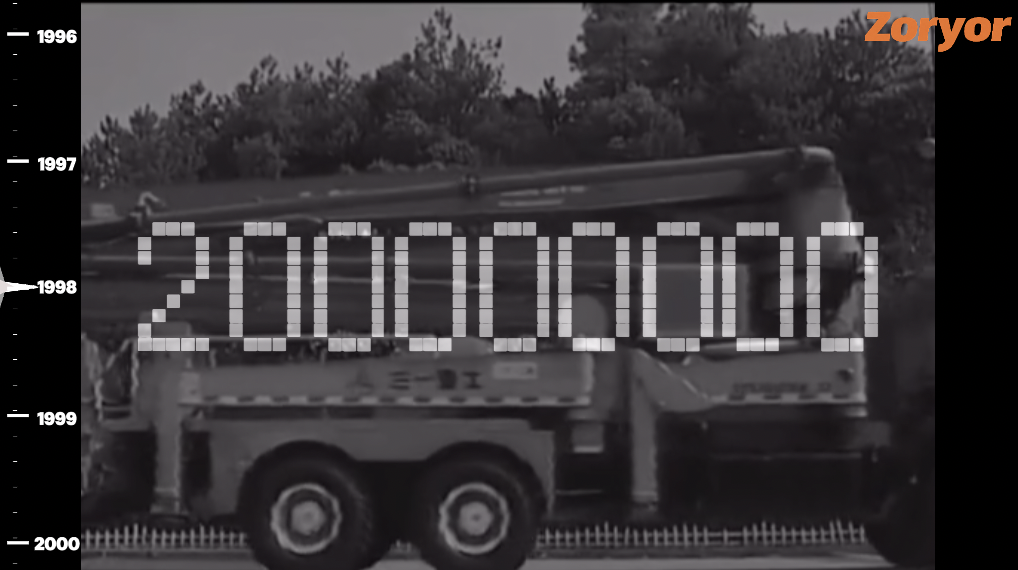
That year alone, revenue from SANY’s trailer‑mounted pumps exceeded 200 million yuan. By now, SANY took the lead in developing two core concrete machinery product lines: trailer‑mounted pumps and pump trucks. Leveraging solid technological advantages, it quickly entered China’s top tier of concrete machinery manufacturers, launching the trend of domestic equipment replacing imports.
Having secured its position in concrete machinery, Liang Wengen soon decided to expand into excavators, launching an independent R&D initiative with the strategic resolution to “unswervingly develop excavators”.
At that time, over 95% of China’s excavator market was monopolized by foreign brands (Caterpillar, Komatsu, Hitachi, etc.), with domestic excavators nearly wiped out. Known as “the jewel in the crown of construction machinery”, excavators require core technologies across hydraulics, structures, control systems and more — fields where SANY had no prior experience.
Initially following the same trial‑production path as trailer‑mounted pumps, SANY simply assembled over a dozen test machines, none of which succeeded. R&D hit major roadblocks: poor hydraulic system matching, prone‑to‑fatigue cracking of structural components, and unstable control systems. Yi Xiaogang led the team to restart from blueprint design, abandoning simple imitation for forward‑looking R&D (once again, it was him). Investing more than 20 million yuan and over a year of repeated trials and optimizations, SANY overcame key technologies including hydraulic system integration, boom‑stick structural optimization, and slewing mechanism stability.
Global Market Expansion-1999
SANY set a 300.8‑meter pumping record at Shenzhen SEG Plaza.
China’s first 37‑meter pump truck with independent intellectual property rights was officially delivered.
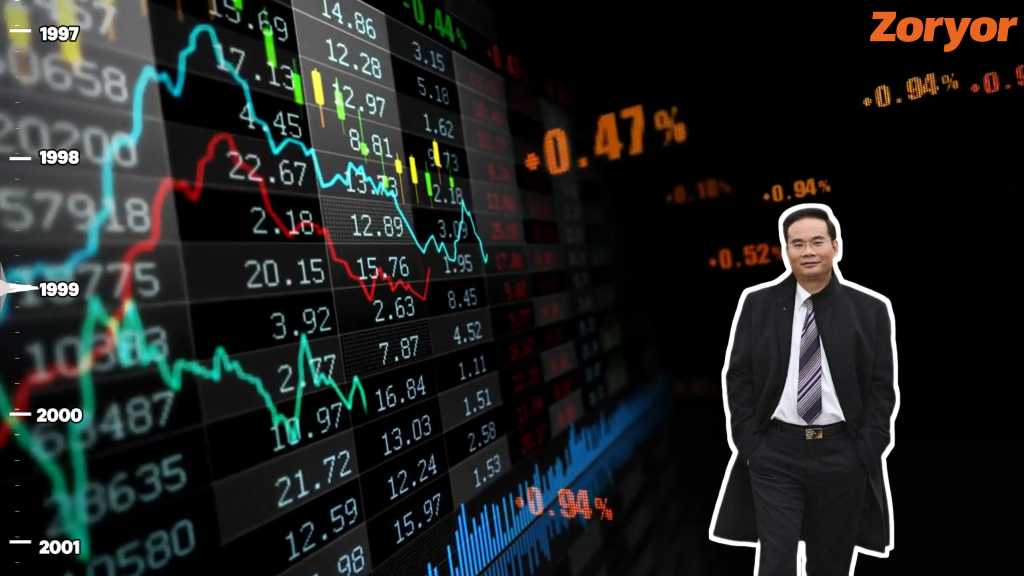
December 4: In recognition of Yi Xiaogang’s outstanding contributions to major technological breakthroughs such as the 37‑meter pump truck, SANY Heavy Industry’s general shareholders’ meeting resolved that Liang Wengen grant 2% of the reserved 5% corporate shares to Yi Xiaogang. After the company’s IPO, these 2% shares were worth approximately 102 million yuan.
SANY’s core board expanded from eight to nine members, demonstrating its core strategy of “building the enterprise through technology”.
2000
Organizational reform: SANY Group was restructured into SANY Holdings, with SANY Heavy Industry as its core subsidiary.
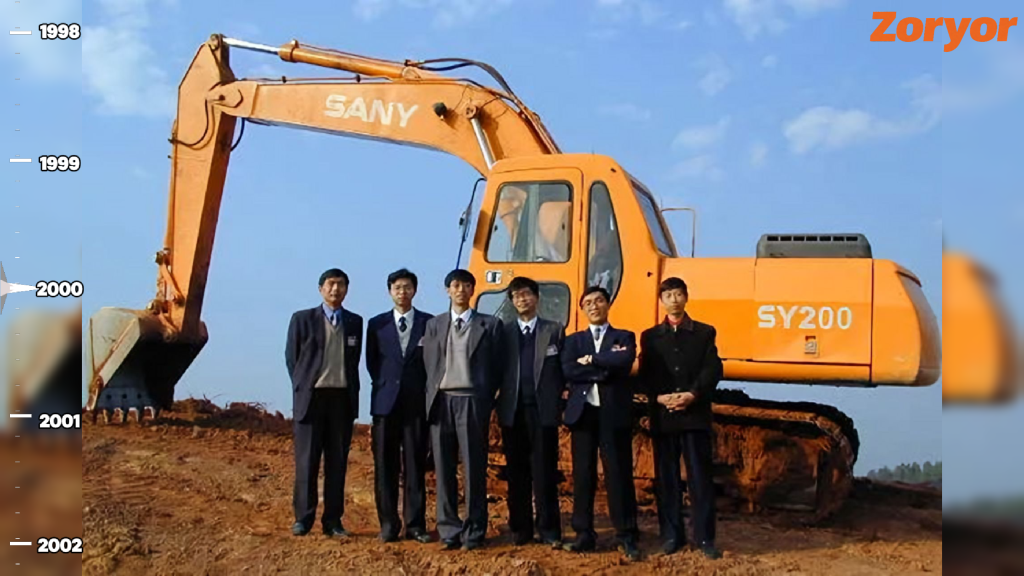
In March, the prototype of SANY SY200 crawler hydraulic excavator rolled off the production line, marking the official launch of SANY’s excavator business. This was China’s first crawler hydraulic excavator developed by a private enterprise.
Prototype specifications: 20‑ton class, hydraulic‑driven, maximum digging force 135kN, bucket capacity 0.8m³.
The same year, SANY launched the world’s first fully hydraulic motor grader, enriching its product portfolio.
2001
In June, the first‑generation excavator was launched to market. Only dozens of units were sold in 2001‑2002.
Core defects remained: mean time between failures was merely 8 hours with poor continuous operation capacity; key components such as booms and sticks cracked frequently; customers lacked confidence in domestic excavators. The enterprise repeatedly discussed discontinuing the loss‑making excavator project, yet Liang Wengen insisted: “We must keep going.”
That same year, SANY proactively mapped out its globalization strategy and explored overseas markets. Relying on core competitive products including self‑developed 37‑meter long‑boom pump trucks and concrete trailer‑mounted pumps, it went global first by cultivating Southeast Asian markets and gradually building a global sales and service network covering multiple countries, taking a critical step toward internationalizing Chinese domestic construction machinery brands.
Early in 2001, drawing on profound technological accumulation in concrete machinery, Yi Xiaogang led the formation of a special R&D team for plateau‑adapted construction machinery. Seizing national major infrastructure opportunities including the Western Development Drive and Qinghai‑Tibet Railway construction, the team tackled plateau construction technical bottlenecks. Targeting common industry challenges such as power attenuation from low‑pressure hypoxia above 4,500 meters above sea level, difficulty starting at sub‑zero temperatures, aging‑induced hydraulic component failure from extreme day‑night temperature differences, and poor fuel atomization, the team repeatedly tested and optimized products via simulated plateau working conditions and field trials. After more than seven months of rigorous testing, plateau‑specific concrete pumping equipment was successfully developed. This technological breakthrough filled the gap in domestic plateau‑adapted construction machinery technologies, helping SANY deeply expand in western China and laying solid technical foundations for undertaking major plateau infrastructure projects.
That year, leveraging precise insights into the domestic market and a mature service system, SANY Heavy Industry reached a distribution cooperation with Fortune Global 500 enterprise John Deere Construction & Forestry Company of the United States. SANY became John Deere’s exclusive general distributor in China, fully responsible for national sales, operation and after‑sales service of its construction machinery and spare parts. John Deere provided comprehensive support to SANY through technical empowerment, professional training and spare‑parts supply, sharing world‑leading construction machinery technologies and mature operational experience. This marked SANY’s first partnership with a Fortune Global 500 firm, sounding the clarion call for its international expansion and opening a new chapter in its global strategic layout. Later, as SANY gradually built its independent global sales network, the partnership naturally ended around 2006‑2007, with both companies embarking on independent development and direct global competition.
On December 11 of the same year, China officially joined the WTO, gradually removing international trade policy barriers and opening new opportunities for SANY Heavy Industry to go global and explore overseas markets.
2002 | The Start of Internationalization
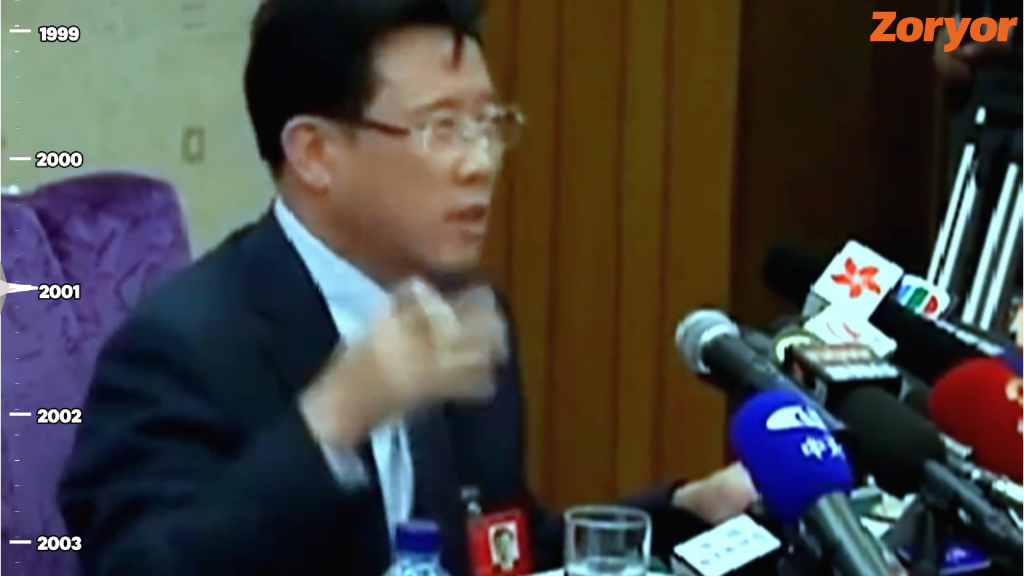
At the Hong Kong International Finance Centre construction project, SANY’s concrete pump achieved a vertical pumping height of 406 meters, breaking Germany’s 400‑meter world record and instantly gaining global fame.
SANY Heavy Industry made its first large‑scale debut at bauma Germany, the world’s top construction machinery exhibition, formally announcing its overseas expansion strategy. In August of the same year, SANY exported its first batch of four PQ190 hydraulic motor graders to Morocco, marking a historic zero‑breakthrough in overseas sales.
Domestically, the company posted annual revenue of 985 million yuan, expanding product lines to include road rollers and cranes, with road machinery accounting for approximately 10% of total revenue. The excavator business continued iterative upgrading: the improved SY200B excavator was launched, solving core defects of the original model including insufficient durability, short working hours and fatigue‑induced structural cracking. However, product return rates remained high, and market acceptance still faced challenges.
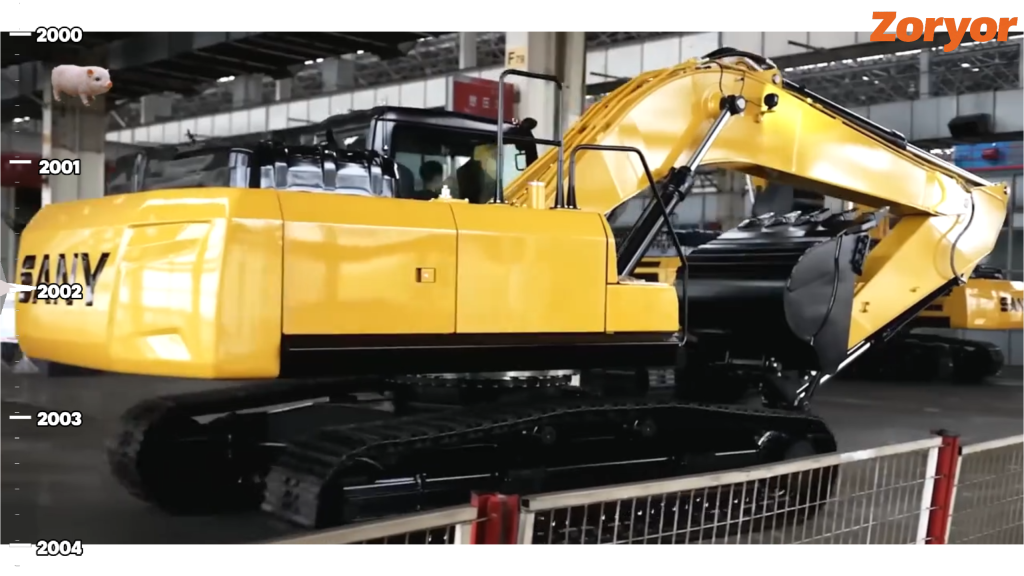
Thanks to solid technologies and deep market cultivation, SANY finally carved out its own space in the concrete machinery industry. In sharp contrast, its newly launched excavator business remained trapped in heavy losses for years. Back then, China’s excavator market was firmly monopolized by overseas giants; early‑generation products suffered prominent drawbacks and low market recognition, leaving SANY facing an extremely difficult path. How did SANY break through adversity, transforming from a loss‑making industry newcomer into the world’s No.1 excavator manufacturer? Stay tuned for our second episode: 2003‑2018: SANY’s Peak‑Stage Competition and Nirvana from Desperation.