There are two distinct manufacturing processes for the frame of laser cutting machines: one features a frame welded from square steel tubes, and the other adopts a frame welded from steel plates. What are the differences between them, and how should you choose when purchasing equipment?
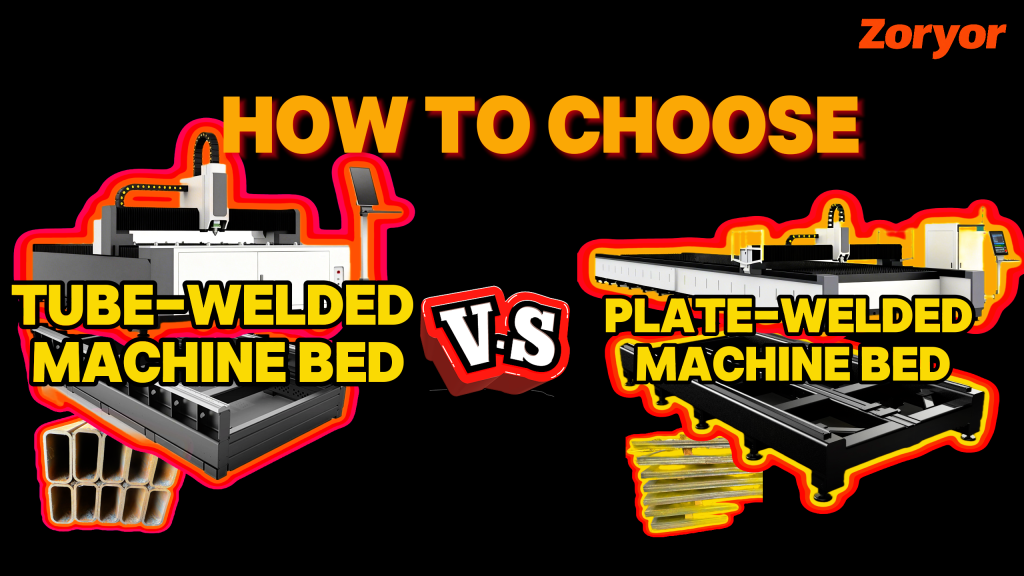
A tube-welded frame is constructed by directly welding square steel tubes to form the main framework. It boasts the lowest production cost and serves as the entry-level option. If you mainly process thin, lightweight sheets and operate the cutter infrequently, a tube-welded frame is your ideal pick. Note that the wall thickness of the square steel tubes must be no less than 6 mm, and the total machine weight must exceed 400 kg. Falling short of these standards will compromise the machine’s stable operation. This frame type is compatible with 1500W to 6000W laser cutters.
A plate-welded frame is fabricated by welding solid steel plates into the main framework. It comes with a higher price tag and counts as an upgraded model. It weighs considerably more than tube-welded frames. Its outstanding rigidity prevents deformation during processing, delivering superior cutting precision and long service life. Most importantly, it supports faster cutting speeds, making it suitable for 6000W to 40000W equipment. One critical requirement for plate-welded frames is the inclusion of reinforcing ribs, alongside mandatory heat treatment. Plate welding creates extensive welded joints that generate residual welding stress; heat treatment is essential to release this internal stress. Skipping heat treatment will inevitably lead to frame deformation over time. (We have uploaded a video documenting the full production process of this frame on our channel—feel free to check it out if you’re interested.)